The Reckoning
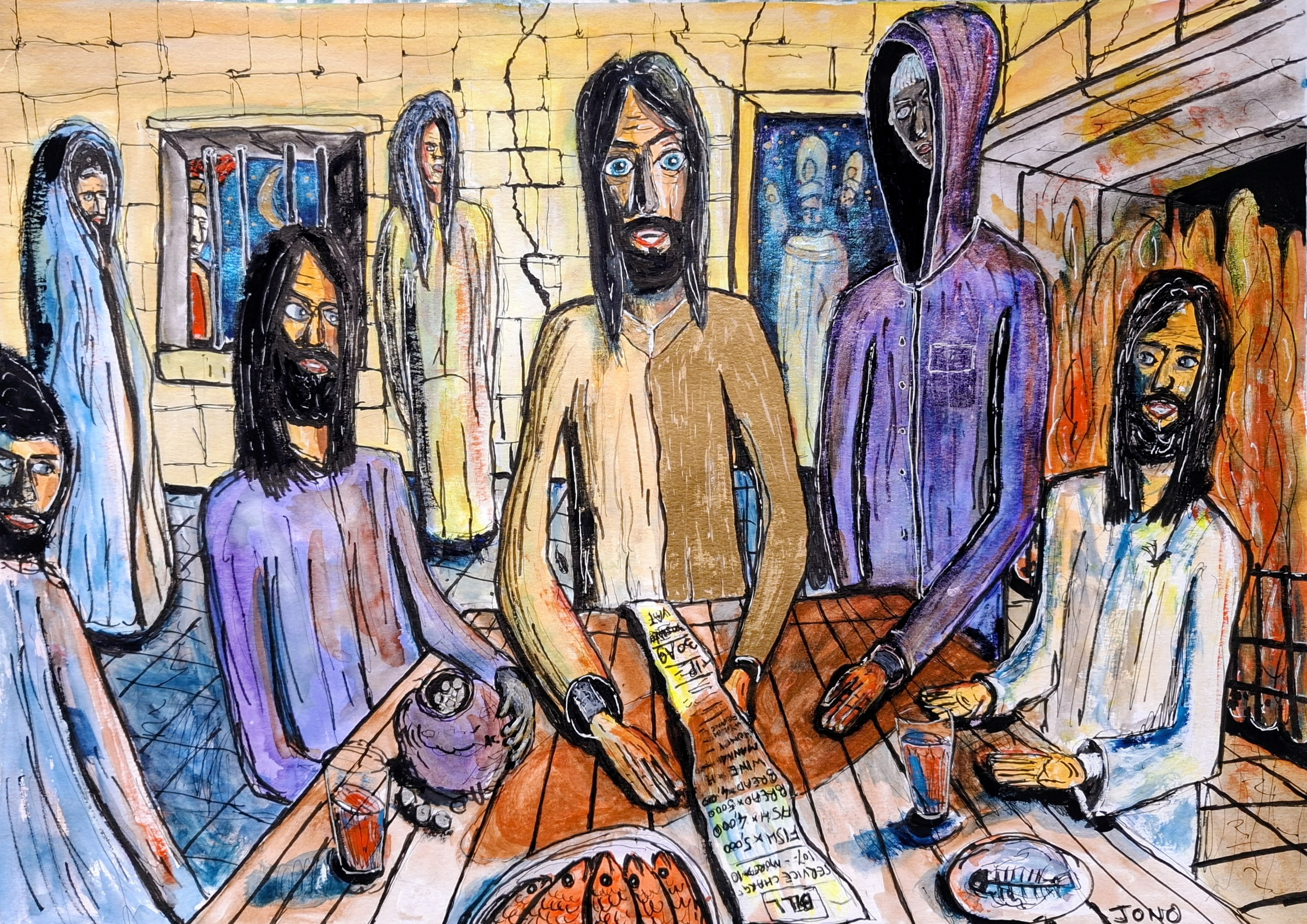
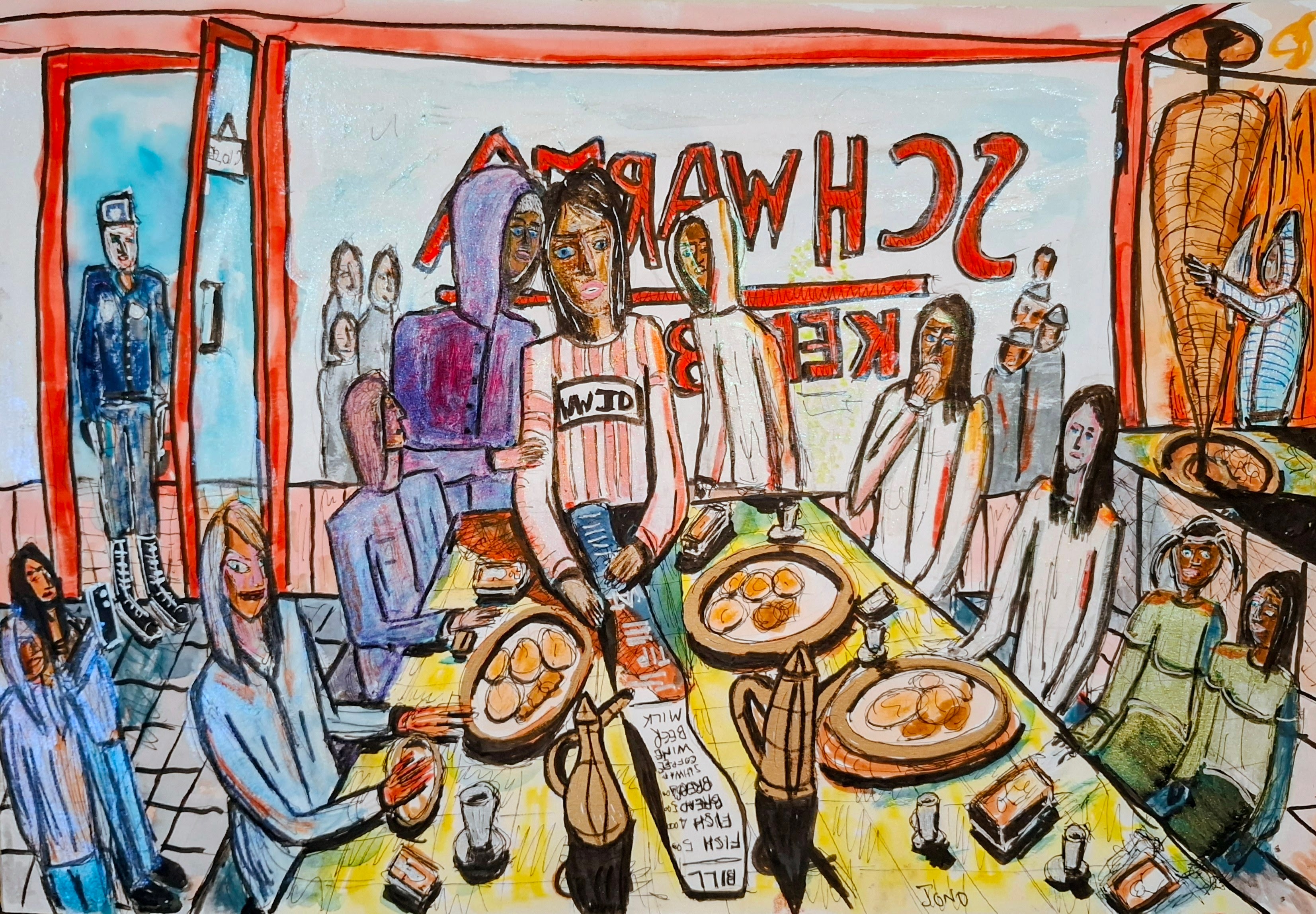
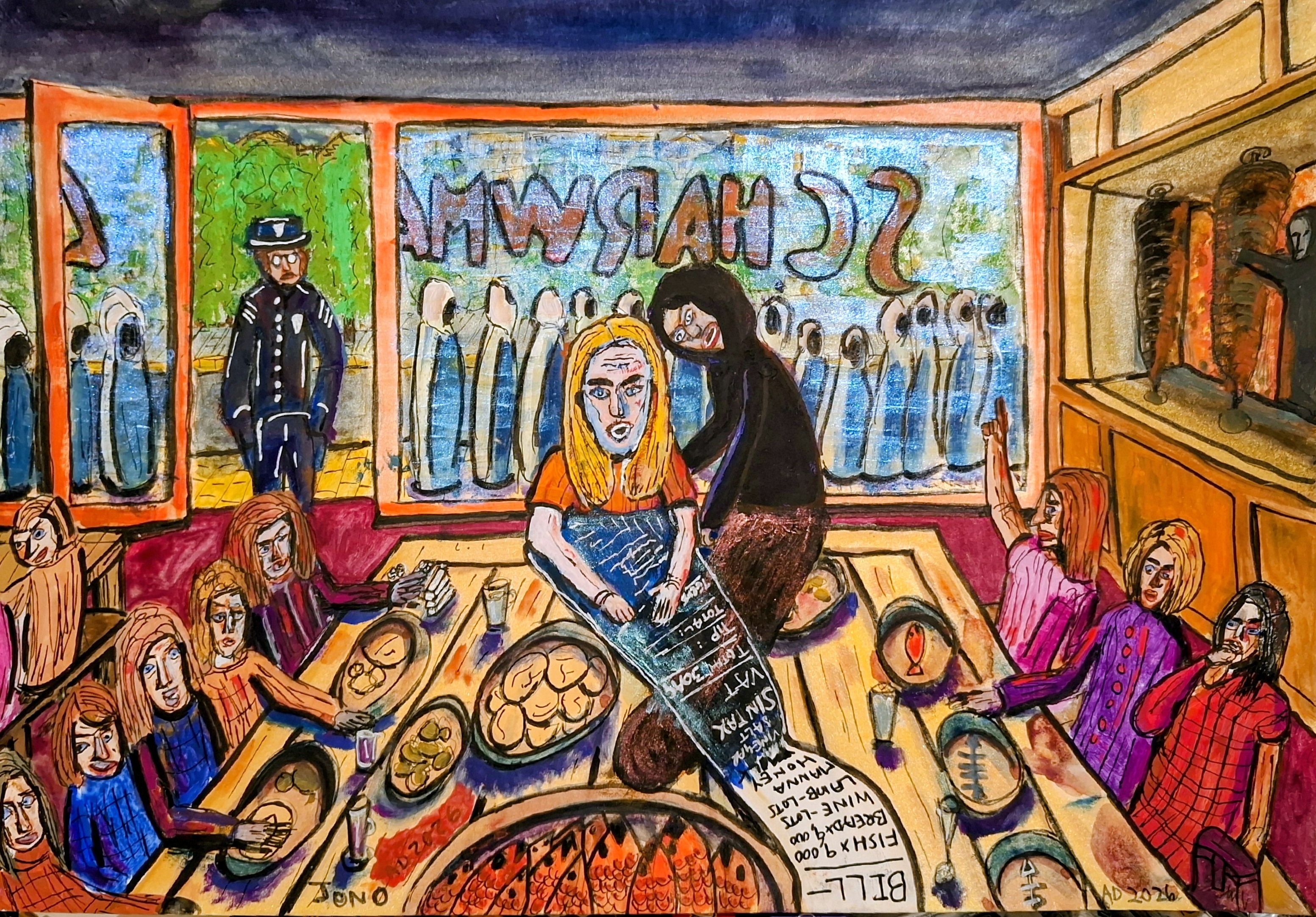
A man feeds thousands for nothing, and at the end of it somebody brings him the bill. That is the whole idea. I painted it three times because the first version did not finish the thought.
The bill is always itemised. Fish, bread, wine, honey, and then the additions that turn a meal into an account: VAT, a service charge, a tip already worked out for you. Nobody argues with the arithmetic, because the arithmetic is correct. What the picture asks is who at the table is going to reach for it, and the answer, every time, is that everyone waits.
All three are painted in mirror writing. The signs, the menu, the word BILL at the head of the scroll, all of it reversed. That is not a mistake I decided to keep. Parareal is the part of the work where the world is seen from a seat that is not the usual one, and here the seat is on the other side of the glass. You are outside looking in, or you are the reflection looking back. Either way you have to do a small amount of work to read what is owed, which seemed about right. Nobody reads a bill at a glance.
The Reckoning is the version people recognise before I say anything. Stone walls, a window with a crescent moon in it, robed figures either side of a long table, fish on the platter and the bones of one already eaten on a plate at the end. The man in the middle holds the scroll out in front of him and looks straight at you. Fish, bread, wine, honey, and then the VAT and the service charge, because the devil does his accounting properly. There is a hooded figure standing at his shoulder who is not eating and not talking. He is waiting. I did not need to make him sinister. Standing still in a room where everybody else is seated does that on its own.
The reading I have is the obvious one and I am not going to pretend otherwise. Judas has thirty pieces of silver in his pocket. He is the only person present who could clear the account. Whether he does is the question the painting declines to answer, and it is why the others are painted looking on rather than looking down.
The Reckoning 2 moves the same scene into a shawarma shop, and I think it is the better painting for it. Red window frames, a spit turning against the wall, SCHWARMA KEBAB across the glass in reverse. The table runs the depth of the picture, loaded with platters of bread and glasses, and the bill lies flat on it near the front where anyone could pick it up. Nobody does. The diners are looking at each other, at their phones, out of the window. A figure in dark blue stands on the pavement outside and does not come in. The debt is in play and the meal carries on, which is what actually happens.
The Reckoning 3 is the one that got away from me in the right direction. The same shop, later and darker. A crowd has formed outside the window, pale and blue and packed shoulder to shoulder, and they are queueing rather than watching. The scroll is unrolled to its full length down the middle of the painting and the list has grown: more fish, more bread, wine and lamb, vinegar, salt, and a sin tax sitting on top of the VAT. The hooded figure has stopped waiting at a polite distance. He is leaning in over the shoulder of the person holding the bill, close enough to read it, and he is enjoying himself. Somebody at the right of the table has finally put a hand up. The painting does not say whether that is an offer or an objection.
What I keep coming back to is the queue. The people outside are not there for the reckoning. They are there for the food, they will be there again tomorrow, and as far as they are concerned the bill on the table has nothing to do with them. That is the part that felt true enough to paint three times. Generosity gets converted into debt eventually, it gets converted quietly, and the people who ate are usually the last to notice it has happened. They are not villains. They were hungry, and somebody was giving it away.
Somebody has to settle up. It is rarely the person who ate.